

 English
 日本語
日本語

In the rapidly evolving landscape of home fragrance, a significant cultural and functional shift has occurred. Fragrance enthusiasts and home decor aficionados are increasingly moving away from the traditional flicking flame, once the only way to scent a room, and embracing the steady, radiant glow of the candle warmer lamp. But as this trend dominates social media feeds and premium home decor blogs, many savvy consumers are left with critical questions: Is this just an aesthetic fad driven by influencers, or does it offer a genuine functional revolution for the modern home? This comprehensive guide dives deep into the science, economics, and safety of using a top-down candle melter versus the age-old, combustion-based method of burning a wick, providing you with the clarity needed to optimize your olfactory environment.
Do candle warmer lamps actually work?
The skepticism surrounding "flame-free" fragrancing is understandable for those accustomed to the immediate heat of a match. However, the efficacy of a candle warmer lamp is rooted in precise thermal physics and controlled energy transfer. Unlike traditional bottom-up warmers or hot plates that struggle to heat through thick glass, a modern lamp utilizes a specialized halogen bulb wax warmer mechanism. These bulbs are engineered to emit infrared heat directed downward, creating a consistent and controlled melt pool across the entire surface of the wax.
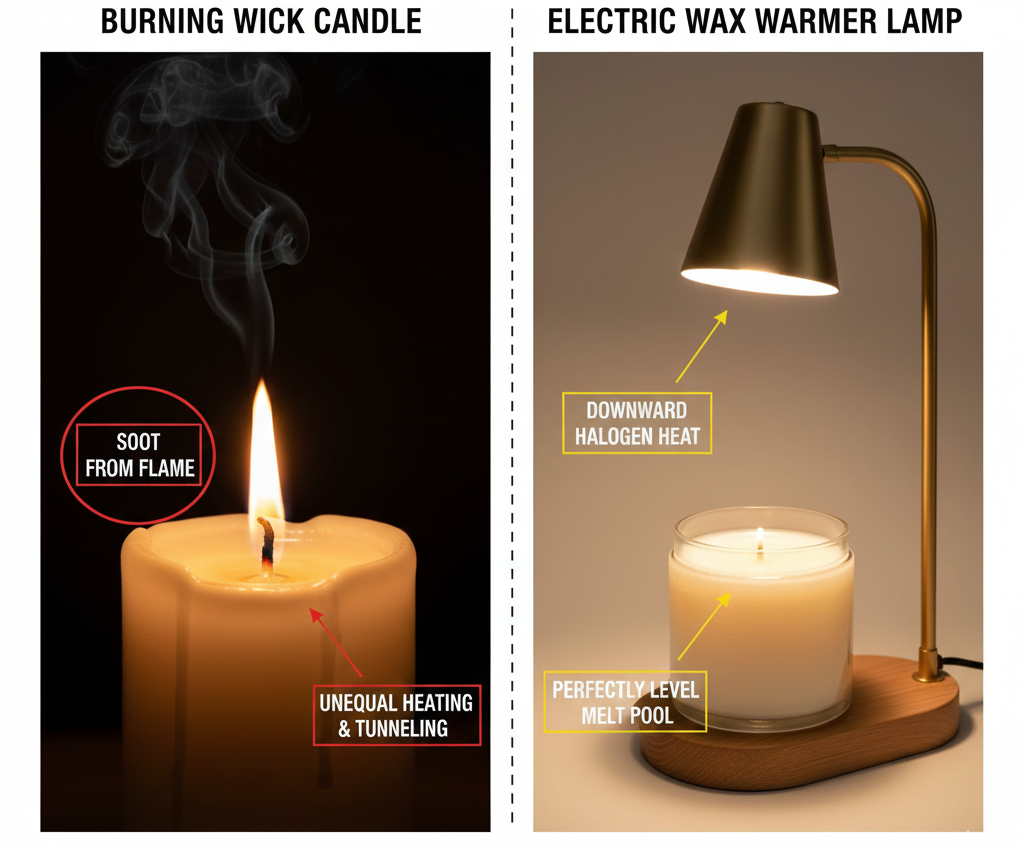
To understand why this method actually works more effectively than a flame, we must examine several key factors:
The Uniform Melting Pool: In a traditional burn, the heat is concentrated at the center where the wick is located. This often leads to "tunneling," where wax on the edges stays solid and is wasted. A top-down lamp heats the entire diameter of the jar simultaneously. This ensures that the fragrance is released from the entire surface area of the wax, maximizing the scent throw without leaving any residue on the glass walls.
Preserving Fragrance Integrity: One of the most overlooked aspects of candle science is the degradation of fragrance oils at high temperatures. When you light a candle, the flame reaches temperatures exceeding 1,000°F. This extreme heat can actually "burn off" or chemically alter the delicate top notes of high-end essential oils before they have a chance to circulate. In contrast, a dimmable candle heat lamp allows the wax to reach its ideal melting point—usually between 120°F and 140°F—which preserves the aromatic complexity and provides a more accurate representation of the candle's intended scent profile.
Mechanical Efficiency and Activation: The heat penetration from a 35W to 50W halogen bulb is specifically tuned to activate fragrance molecules at a molecular level. By maintaining a steady temperature, the lamp creates a continuous cycle of fragrance release. This allows the scent to fill large, open-concept spaces more efficiently than a flickering flame, which can be affected by drafts and inconsistent oxygen levels, ultimately providing a consistent and soot-free fragrance experience.
Is it better to burn a candle or use a candle warmer lamp?
Choosing between the traditional path and the technological one depends on what you value most: the primal ritual of fire or the scientific result of fragrance delivery. While burning a candle provides a specific "hygge" atmosphere that a static bulb cannot perfectly replicate, the electric jar candle heater is objectively superior when analyzed through the lenses of functionality, health, and air quality.
|
Feature |
Traditional Burning (Flame) |
Candle Warmer Lamp (Top-Down) |
|---|---|---|
|
Air Quality |
Produces carbon soot and VOCs |
100% Soot-free and smoke-free |
|
Scent Throw |
High heat may distort delicate notes |
Pure, un-scorched fragrance delivery |
|
Wax Longevity |
Wax is consumed as fuel for the flame |
Wax remains; only aromatic oils evaporate |
|
Safety Risk |
High (Open flame/Fire hazard) |
Low (No flame/Integrated timer) |
|
Maintenance |
Requires constant wick trimming |
Zero maintenance; "set and forget" |
|
Atmosphere |
Moving flame, cozy flicker |
Soft ambient glow, static dimmable light |
The debate often settles on these three pillars of the user experience:
Health & Indoor Cleanliness: Every time you light a wick, you are initiating a combustion reaction. This process inevitably produces byproducts, including carbon soot and trace amounts of volatile organic compounds (VOCs). If the wick is not trimmed perfectly, this soot can stain your curtains, white walls, and even settle in your home's ventilation system. Using a scented wax infrared lamp eliminates combustion entirely. You receive the olfactory benefits of the candle without the chemical byproducts of smoke, which is a critical consideration for those with respiratory sensitivities or a passion for pristine interior design.
Operational Convenience: Traditional burning is a high-maintenance activity. You must manage the "memory burn" to prevent tunneling, trim the charred remains of the wick to 1/4 inch, and ensure the flame doesn't grow dangerously high. With a modern aesthetic candle warmer, the complexity is removed. You simply place the jar under the light and flip a switch. There is no risk of ruining a candle's future performance by only lighting it for a short duration.
Atmospheric Control: While a flame offers a flicker, a lamp offers a dimmable glow. This allows the user to treat the device as both a fragrance delivery system and a piece of accent lighting. The ability to control the "volume" of the scent by adjusting the light intensity is a level of customization that a static flame simply cannot offer.
Are candle warmer lamps safer than burning candles?
Safety is perhaps the most compelling argument for making the transition to a flame-free home fragrance solution. According to global fire safety statistics, unattended candles remain one of the leading causes of residential fires. The inherent risk of a burning wick is significant—it is a live fire in a glass container that can reach temperatures high enough to shatter the jar if the wick migrates too close to the glass edge.
A safe candle melting device addresses these hazards through several innovative design choices:
Elimination of the Open Flame: This is the primary safety benefit. For households with curious toddlers or active pets (especially cats that enjoy jumping on counters), the removal of a live flame provides immense peace of mind. There is no risk of a singed tail, a knocked-over flame, or a child reaching for a bright, burning object.
Smart Technology Integration: Most premium lamps are now equipped with an auto-shutoff candle timer. This feature is revolutionary for those who suffer from "did I leave the candle on?" anxiety. You can set the device for 2, 4, or 8 hours, knowing it will safely power down whether you are at home, in another room, or have fallen asleep.
Thermal Stability: Open flames are notoriously unstable. They react to drafts and can cause the glass of a candle jar to overheat unevenly. A lamp maintains the glass at a much lower, more consistent temperature. This stability prevents "thermal shock," which is the primary cause of candle jars cracking or exploding.
Because the device functions as an infrared wax liquefier rather than a combustion source, it is often the only approved way to enjoy scented candles in restricted environments. This includes professional offices, high-traffic retail spaces, and even college dormitories where open flames are strictly forbidden by fire codes. It is a sophisticated upgrade that mitigates daily risk without sacrificing the luxury of a scented home.
Do candle warmer lamps save you money in the long run?
While the initial investment in a high-quality adjustable height candle warmer may seem significant compared to a cheap box of matches, the long-term return on investment is staggering. The economic logic of the lamp lies in the decoupling of "fragrance release" from "wax consumption."
The financial advantages can be broken down into three main areas:
Decelerated Wax Consumption: When you light a wick, the wax serves as the fuel. It is physically consumed and disappears into the air as it burns. Under a lamp, the wax is merely a carrier for the fragrance oil. The wax melts, the oil evaporates, and the wax remains in the jar. This extended candle life technique allows a high-end $70 luxury candle to last anywhere from three to five times longer than it would if burned.
The Scent Refresh (Pour-Off) Method: To maintain the efficacy of a candle under a lamp, you eventually need to manage the wax pool. Once you notice the scent throw has weakened after dozens of hours of use, you simply pour off the top half-inch of "spent" wax into a waste container. This reveals a fresh, unheated layer of wax underneath that is still fully saturated with fragrance oils. This ensures you utilize 100% of the fragrance you paid for, rather than losing it to combustion.
Rescuing "Drowned" or Tunneled Candles: Every candle lover has a "graveyard" of candles that have tunneled too deeply to be lit or where the wick has drowned in a pool of wax. A halogen bulb fragrance enhancer can rescue these expensive items. Since the lamp doesn't require a wick to function, it can melt and extract the fragrance from any jar, regardless of the wick's condition.
When you factor in the extremely low energy consumption of a 50W bulb—amounting to only pennies per day—the device typically pays for itself within the first few months by drastically reducing your annual candle replacement frequency.
How to choose the best candle warmer lamp for your home?
Not all warmers are created equal, and choosing an inferior model can lead to a poor scent experience or damaged candles. To ensure you are getting a professional-grade experience, you must evaluate the technical specifications and design elements of the device.
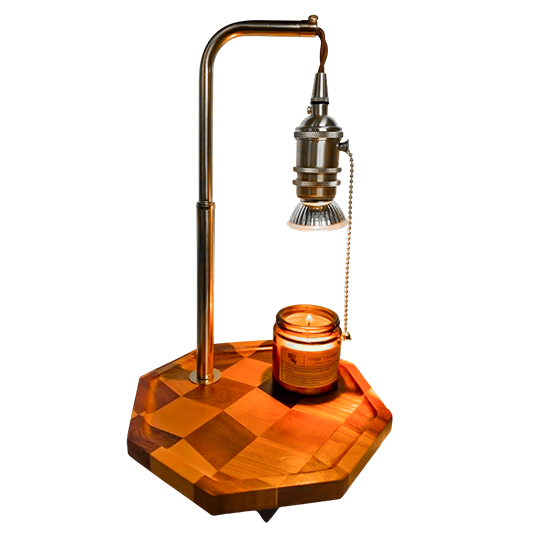
Critical Technical Features
Halogen Bulb Wattage: This is the engine of the device. A 35W bulb is generally sufficient for small tins or shallow candles. However, if you prefer large, thick glass jars (such as those from Yankee Candle), a 50W bulb is mandatory. It provides the thermal power necessary to create a functional melt pool through thicker glass.
Adjustable Height Capability: Since candles come in a vast array of shapes and sizes, a fixed-height lamp is a major limitation. An adjustable height candle lamp allows you to maintain the "sweet spot"—the 3 to 5-inch gap between the bulb and the wax surface. If the bulb is too far away, the wax won't melt; if it's too close, it could overheat the jar.
Integrated Dimmable Control: This feature acts as a "volume knob" for your fragrance. If you are using a strong floral candle in a small bedroom, you can dim the lamp to a lower setting for a subtle aroma. Conversely, if you need to neutralize cooking odors in a large kitchen, turning the lamp to full power will maximize the scent throw.
Aesthetic and Design Integration
A decorative wax melter should be more than just a tool; it should be a piece of high-end home decor. Modern designs now incorporate premium materials such as solid marble bases, hand-blown glass shades, and minimalist wood frames.
A standout example of this marriage between form and function is the Retro Candle Warmer Lamp With Brass And Wood. This specific design capitalizes on the "Grandmillennial" and Mid-Century Modern trends by combining the warmth of natural wood with the timeless sophistication of brushed brass. The contrast between the organic texture of the wood base and the metallic sheen of the brass neck creates a nostalgic yet functional centerpiece. Choosing a model like this ensures that the device provides value even when it is turned off, serving as a sophisticated accent piece while waiting to deliver its next high-performance fragrance experience.