

 English
 日本語


Yes—a lamp that mimics natural light exists, and the difference between a well-engineered one and an ordinary “daylight” LED bulb is much greater than most shoppers realize. The real question is not whether such lamps exist, but how closely they reproduce the measurable qualities of sunlight—spectrum, color temperature, color rendering, and intensity—and whether those qualities solve the problem you are actually trying to solve.
Think about a familiar situation. You spend eight hours in a windowless office, commute home in the dark, and try to relax under a single warm ceiling fixture. By evening, your eyes feel tired, colors look washed out, and your energy has flatlined. In that scenario, a lamp capable of reproducing daylight can do far more than improve visibility. It can reduce eye strain, make skin tones and printed colors look correct, and help your circadian rhythm stay synchronized with the outside world.
There are limits that no lamp can remove. Direct noon sunlight delivers roughly 100,000 lux; a typical room lamp delivers a few hundred. Any device that claims to replace the sun is overstating. But a good lamp does not need to reach solar intensity to be useful. It needs to reproduce the biologically important properties of daylight: a balanced continuous spectrum, high-fidelity color rendering, adequate brightness for the task, and preferably a color temperature that shifts with the time of day.
This article covers what natural light really consists of, why ordinary bulbs fail to imitate it, which specifications to verify before buying, the main product categories available, and how decorative lighting fits into a complete natural-lighting strategy.
What “Mimicking Natural Light” Actually Means
Natural light is not a single color, and that is the first thing to understand before evaluating any product. Sunrise and sunset are warm, typically sitting near 2000–3000K, when long-wavelength reds and oranges dominate. A clear midday sky measures roughly 5500–6500K. A heavily overcast sky can appear cooler still. All of these are natural, yet each creates a different visual and biological effect. When people ask whether a lamp can mimic natural light, they usually mean one of two things: reproducing the balanced white daylight of midday, or reproducing the gentle warm light of morning and evening. A single lamp rarely does both convincingly unless it offers tunable white output.
At the physical level, sunlight has a nearly continuous spectrum across the entire visible range. It contains every wavelength from violet through deep red, with no large gaps. This continuity is what makes color perception reliable. A white wall under sunlight looks white, a red shirt looks red, and skin tones look healthy. When a light source is missing parts of the spectrum, perception shifts. Some colors appear muted, others change character completely. This is why CRI and similar scores were developed: to quantify how faithful a light source is at rendering colors.
Three properties determine how natural a lamp feels in practice:
- Color temperature (CCT), measured in Kelvin, describes whether the light looks warm, neutral, or cool. Warm lamps sit around 2700–3000K, neutral around 4000K, and cool around 5000–6500K. CCT has a direct effect on alertness and mood.
- Color rendering, most commonly expressed as CRI, measures how accurately colors appear compared with a reference source. Daylight scores close to 100 on the standard scale.
- Intensity and distribution, measured in lux, determine both the usable brightness and the hardness of shadows. The sky lights us from a huge, diffuse area; a naked bulb creates harsh contrast regardless of its spectrum.
These three properties are the difference between a bulb labeled “daylight” and a lamp that genuinely mimics daylight. The label on most consumer bulbs simply indicates a cool color temperature around 6500K; it says nothing about the spectrum or color rendering. To evaluate a product honestly, you have to look past the packaging and into the data sheet.
Why the human body responds to light quality
The retina contains more than the rods and cones that create images. A small population of cells produces melanopsin, a photopigment especially sensitive to the blue-cyan region of the spectrum. These cells do not help us see; they send signals to the suprachiasmatic nucleus, the master circadian clock, and they influence alertness, body temperature, melatonin release, and sleep timing. Bright, blue-enriched light early in the day reinforces the signal that it is morning. Dim, warm light in the evening allows melatonin to rise. The spectrum and intensity of indoor lighting therefore matter for physiology, not just for aesthetics. A lamp that mimics daylight can, under the right conditions, improve daytime alertness and protect nighttime sleep.
Why Ordinary Lamps Miss the Mark
The most common LED bulb sold today uses a blue LED chip coated with a yellow phosphor. That combination produces a strong blue spike near 450nm and a broad yellow hump, but it is weak in the cyan-turquoise range around 480–500nm and often thin in deep red. The result is a source that looks white to the eye yet renders colors imperfectly. Reds become dull, skin looks sallow, and certain surfaces appear to change hue depending on the angle of view.
The situation worsens when a product is marketed by color temperature alone. A “daylight” LED at 6500K is simply a cool-white bulb; it may have exactly the same narrow spectrum as a warm one, just with a different balance of blue and yellow. The word daylight on the package does not mean the lamp reproduces the sun’s spectrum, and no regulation prevents manufacturers from using the term loosely. The only reliable way to compare products is through measured scores: CRI, R9, TM-30, and the rest of the technical vocabulary covered in the next section.
Fluorescent tubes, still common in office buildings, have a different problem. They produce light through discrete emission lines rather than a continuous spectrum, and their rendering depends on the phosphor blend used. Many fluorescent fixtures also exhibit visible flicker, especially as they age, and their light can carry a slight green cast that makes rooms feel clinical. Modern LED panels have largely replaced them, but a budget LED panel is not automatically better; it can have its own spikes, dips, and shimmer.
Dimming behavior is another common failure. An inexpensive driver dims by rapidly switching the LED on and off, a method called pulse-width modulation, which can cause visible or subconscious flicker at certain levels. Some lamps shift their color temperature as they dim, turning from neutral white to a muddy yellow. A lamp that mimics natural light should hold its color through the full dimming range and do so without flicker, because the whole point is to provide stable, comfortable illumination at any level.
The practical consequences of a poor spectrum are easy to underestimate. Skin and food look different, printed colors appear inaccurate, and the eyes work harder to focus because reduced red content lowers contrast around fine details. Over hours of use, this contributes to fatigue and headaches. For anyone spending long evenings under artificial light, the gap between an inexpensive 80-CRI bulb and a properly designed full-spectrum lamp is a real, measurable comfort difference, not a marketing nuance.
The Metrics That Separate Convincing from Fake
Manufacturers love to quote impressive-looking numbers, and the lighting industry has produced a dense alphabet of standards that most shoppers never fully unpack. The table below summarizes the ones that actually matter when comparing natural-light-mimicking lamps.
| Metric | What it measures | Why it matters | Recommended level |
|---|---|---|---|
| CRI Ra | Average color fidelity for eight standard test colors | The most widely quoted rendering score | 90 or higher |
| R9 | Rendering of saturated red | Red is the color LEDs most often render poorly; affects skin and wood tones | 50 or higher |
| TM-30 Rf / Rg | Modern fidelity and gamut scores using 99 test colors | A more complete and honest rendering picture than CRI | Rf 90+, Rg 95–105 |
| CCT | Correlated color temperature, in Kelvin | Sets the warm or cool character of the light | 4000–5000K for daytime; 2700–3000K for evening |
| Flicker | Rapid variation of light output over time | Visible or subconscious flicker causes eye strain | Less than five percent modulation at all dim levels |
| Melanopic EDI | Circadian-effective illuminance in melanopic lux | Predicts melatonin suppression and alerting effect | Above 250 during daytime use |
CRI Ra is the score most shoppers see first. It averages the rendering of eight pastel color samples, which means a product can achieve a high Ra while still rendering red poorly. R9 addresses that weakness by measuring saturated red specifically. A lamp with CRI Ra 95 and R9 80 will make skin, wood, and warm tones look dramatically better than one with Ra 80 and R9 30, even though both are sold as “high CRI.”
TM-30 is a newer, more complete standard. It uses 99 color samples and reports two numbers: Rf (fidelity, how true colors look) and Rg (gamut, whether colors look saturated or washed out). A natural spectrum like daylight scores close to Rf 100 and Rg 100. Lamps built around the violet-pump LED architecture, which uses a violet die with a more complex phosphor blend instead of a blue die with a single yellow phosphor, routinely reach high Rf values and are among the closest conventional products to daylight.
Flicker and melanopic EDI are less familiar but equally important. Flicker is usually invisible at high frequencies, yet it still affects eye fatigue and even headache frequency in sensitive users. Melanopic EDI expresses how strongly a lamp stimulates the circadian pathway, measured in melanopic lux. A lamp that mimics natural daylight should be capable of a high melanopic EDI during the day and should dip to very low values at night; that is exactly what tunable white models do by shifting both CCT and intensity together.
The Main Types of Lamps That Mimic Natural Light
Knowing the metrics is useful, but the market organizes itself into distinct product categories, each targeting a different need. The table below compares the main types.
| Category | How it mimics daylight | Best for | Limitations |
|---|---|---|---|
| Light therapy lamps | High luminous intensity, usually 10,000 lux at a defined distance, with white light designed to stimulate the circadian system | Seasonal mood changes, shift work, morning alertness | Rendering quality is often modest; not designed as general room lighting |
| Full-spectrum LED bulbs and panels | Violet-pump or multi-phosphor LEDs with CRI 95+ and minimal spectral gaps | Reading, crafts, makeup, color-critical work | Need to verify the actual spectrum; price varies widely |
| Sunrise alarm clocks | Gradual dim-to-bright ramp with CCT shifting from warm to neutral over 20–40 minutes | Gentle morning waking, bedroom use | Peak brightness is usually modest |
| Tunable white task lamps | User-adjustable CCT from warm to cool with smooth dimming | Offices, studies, flexible all-day use | Quality depends on driver and LED binning |
| Skylight-simulation panels | Large-area diffuse glow mounted in the ceiling plane, sometimes with color shifting | Windowless offices, interior rooms, photography | Higher cost and installation complexity |
| High-CRI continuous lights | Broad-spectrum output for video and product photography | Content creation, studios | Often heavy, and not always pleasant for living spaces |
Light therapy lamps are the category most people encounter when they search for lamps that mimic daylight. The classic design delivers 10,000 lux at a distance of about 30–45cm, which is roughly ten times brighter than ordinary office lighting. The user sits beside it for 20–30 minutes in the morning, typically with the light positioned to the side rather than directly in front of the eyes. The goal is circadian stimulation, not general illumination. Many therapy lamps use cool white light around 5000–6500K, which is appropriate for morning use, and they often skip high color-rendering performance because that is not their purpose.
Full-spectrum bulbs and panels are the category for general use. A high-quality full-spectrum LED uses a violet pumping die and several phosphors to cover the entire visible range, reaching CRI Ra above 95 with a smooth curve. These lamps render colors almost as faithfully as daylight and are the best choice for a desk, a reading chair, or a kitchen workstation. Their limitation is simply that a single bulb still produces the same lux as any other bulb; it renders colors better, but it does not make the room brighter.
Sunrise alarm clocks and tunable white lamps take the temporal approach. The most convincing versions begin at a warm, dim setting and gradually raise both brightness and color temperature over half an hour, mimicking the natural progression of dawn. In the evening, the same lamp can reverse the process. Dynamic tuning is arguably the closest a lamp can come to natural light, because natural light is itself a moving target; the sun never sits still.
Skylight-simulation panels, sometimes described as virtual skylights, embed a large diffusing panel into the ceiling. Because they light a room from above with a wide, soft glow, they reproduce the spatial character of daylight better than any table lamp. They are common in windowless offices, medical spaces, and high-end residential projects, and they can be combined with tunable white drivers to follow the time of day.
How Close Can a Lamp Realistically Get?
The honest answer is: closer than most people think, but with clear physical ceilings. On spectrum and color rendering, a well-designed full-spectrum lamp can match the visible part of daylight closely enough that most people cannot tell the difference in a blind test. If you place a CRI 95 violet-pump panel next to a north-facing window on an overcast day, the two sources look very similar when viewed through a diffuser. That is a genuine achievement of modern LED technology.
Intensity is the biggest gap. The sun delivers around 100,000 lux at the earth’s surface on a clear day, and even an overcast sky still provides 10,000–20,000 lux. A light therapy lamp reaches 10,000 lux only at a short distance, and a regular room lamp typically delivers 300–500 lux on the work surface. The human circadian system responds to absolute light intensity, not just proportionally; this is why a therapy session needs to be held close to the lamp. No portable lamp can fill a room with daylight-level intensity without overheating, consuming excessive electricity, and creating glare, so the practical ceiling is a few thousand lux over a small area.
Spectral completeness also has limits, but they matter less than most buyers think. Sunlight includes ultraviolet and infrared that the retina does not use for vision or circadian signaling in any significant way. For indoor use, the visible range is what counts, and that can be reproduced almost completely. The missing ultraviolet is irrelevant for ordinary lighting, and the missing heat is often desirable, since sunlight through a window is not always comfortable anyway.
Spatial distribution is a third factor. Natural light arrives from a broad dome of sky, creating soft shadows and even illumination. Any single lamp, no matter how good its spectrum, creates a pool of light surrounded by darkness. The solution is not a better lamp but a better lighting scheme: bounce light off the ceiling and walls, add a second source, or use a large panel. A room lit from multiple angles with high-CRI sources feels dramatically more natural than a room lit by one perfect bulb.
Finally, there is the temporal dimension. Daylight changes continuously, and our brains expect that. Tunable white systems that shift from cool in the morning to warm in the evening produce a more convincing experience than any fixed lamp, because they recreate not just the spectrum of daylight but its rhythm. If the question is whether a static lamp can fool you into believing you are outdoors, the answer is no. If the question is whether a lamp can give you most of the visual and biological benefits of daylight, the answer is clearly yes, provided you choose the right category and use it correctly.
What to Look For When You Buy
With the concepts in place, the buying process becomes a checklist rather than a leap of faith. The following points will protect you from the most common and most expensive mistakes.
- Verify the CRI score. Look for CRI Ra of 90 or higher, ideally 95 or higher. Also check R9; anything below 50 will make reds and skin tones look dull. If the package shows only “CRI 80,” treat it as a budget product, not a daylight-mimicking lamp.
- Choose the color temperature for the use. For daytime focus and work, select 4000–5000K. For evening relaxation, 2700–3000K is more appropriate. If a lamp is your only source for several hours, prefer a tunable-white model that covers both ranges.
- Confirm flicker performance. A truly stable lamp should be flicker-free at every dimming level. When in doubt, view the lamp through a smartphone camera while dimming it; visible moving bands indicate modulation that your eyes are also sensing, even if you do not consciously see it.
- Check the lux rating at a realistic distance. A therapy lamp rated at 10,000 lux at 30cm may drop to under 1,000 lux at arm’s length. Read the fine print, and match the rated distance to how you actually sit.
- Look at the phosphor technology. Violet-pump LEDs, described in the data sheet as “violet” or “multi-phosphor,” generally outperform blue-pump LEDs in spectral smoothness.
- Inspect the diffuser and glare. The lamp should have a frosted or prismatic diffuser that hides the individual LEDs. Bare chips produce harsh glare that no spectrum quality can compensate for.
- Confirm certifications. CE and RoHS indicate that the product meets European safety and materials standards; UL or equivalent regional marks matter for commercial use.
- Test the dimming curve. A good lamp holds its color temperature as it dims. If a lamp turns noticeably orange or pink before the minimum level, the driver or LED binning is below par.
These checks sound technical, but they take only a few minutes once you know what to look for. It is worth being patient, because the difference in daily comfort between a well-engineered lamp and a superficially similar budget model is large. The right lamp will last for years and quietly improve the quality of every task performed under it.
Also think about warranty and return policy. A lamp’s true behavior at different dim levels is hard to assess in a store. Buying from a supplier that allows returns, or reading independent measurements from the data sheet, reduces the risk of ending up with a lamp that looks good on paper but disappoints at home.
Where to Place It and How to Use It
The best lamp in the world produces disappointing results if it is placed wrong. Natural light comes from above and from a wide area, so the first rule is to avoid positioning a daylight-mimicking lamp as a tiny bright spot at eye level. Instead, treat it as an indirect source wherever possible.
For a light therapy lamp, place it at the recommended distance, usually 30–45cm, to one side of your face, so the light enters the eyes at an angle rather than straight on. The standard protocol is 20–30 minutes in the first hour after waking, while eating breakfast, reading, or working. The lamp should remain at the same distance during the session; moving farther away immediately reduces the dose.
For a full-spectrum task lamp, aim the light at the work surface rather than at your eyes. A good setup has the lamp at one side, slightly forward of your position, with the head angled so that the beam covers the document or keyboard without casting your own shadow. If the lamp has a dimmer, run it at a level that feels comfortable rather than maximally bright; the goal is good contrast, not a blinding pool.
For a room, use layering. An overhead source provides ambient light, a task lamp supports concentrated work, and an accent lamp fills corners and shadows. Bounce light off white or light-colored walls to create a soft, sky-like effect. Even a simple floor lamp aimed at the ceiling can transform the character of a room, because large reflective surfaces turn a point source into an area source, reproducing the diffuse quality of daylight.
Timing matters as much as placement. To support your circadian rhythm, use cool, bright light in the morning and through the early afternoon, then shift to warm, dim light a couple of hours before bed. If your lamp has a fixed color temperature, choose the warm side for evening use and accept that it is not a daytime lamp. This rhythmic approach, more than any single product, is what makes a home lighting plan feel natural over the course of a full day.
The Role of Decorative Lamps in a Natural-Light Plan
There is a point where the search for a natural light lamp reaches a wall: no product will ever make a windowless room feel like a meadow. After the spectrum, intensity, and placement are correct, the remaining step is aesthetic. The human brain judges a room not only by the brightness and color of the light but by the materials, textures, and associations around it. A space filled with flat white light may be technically accurate, but it will feel like a laboratory if nothing in it echoes nature.
This is where decorative lamps earn their place in a lighting strategy. A lamp with a wooden frame, a leaf pattern, or a soft textured shade does two things at once. It provides the warm accent layer recommended in the previous section, and it tells the eye that this is a room with character, not a light box. The most effective designs borrow from nature in ways that are easy to overlook but hard to forget.
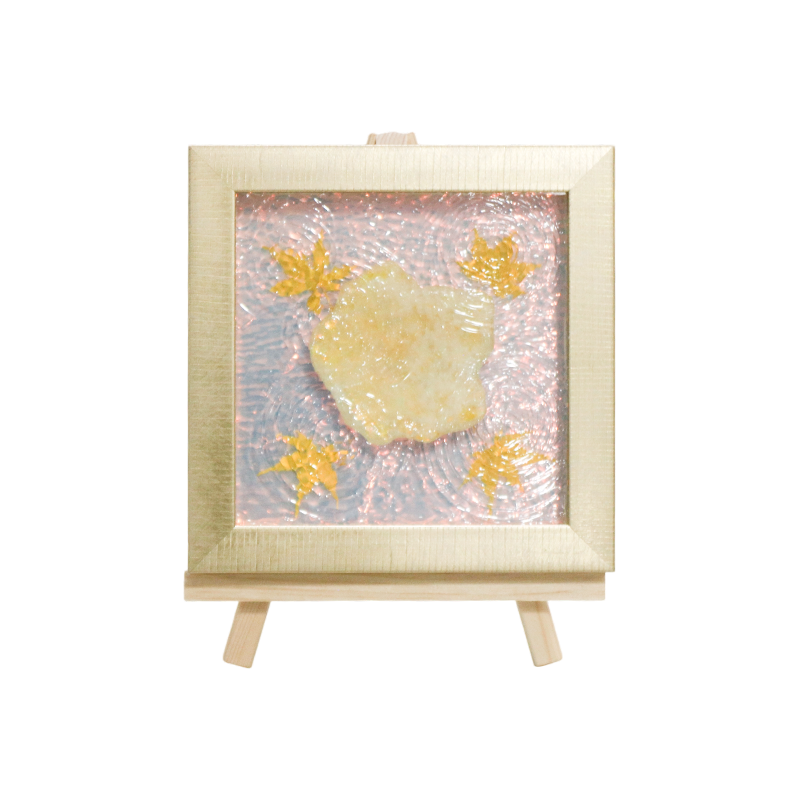 Water Ripple Amber Maple Leaf Art Lamp with Gradient Spiral BaseThis lamp recreates autumn Kyoto tones with amber maple leaves and a blue-purple spiral base, offering a warm, diffused accent light that adds character to a sofa side or reading corner.View Product →
Consider a realistic art lamp with an amber maple-leaf pattern. The amber tones recall the end of a clear autumn afternoon, the moment when sunlight becomes golden and diffuse. Used as an accent light beside a sofa or in a reading corner, it gives a space the warm signature that cold white LEDs remove. The visual effect is not daylight mimicry in the technical sense, but it is natural light in the emotional sense: the brain registers autumn, warmth, and transition, the same cues that make a sunset feel restful.
Our detailed guide to realistic art lamps with wooden frames explains how these pieces combine a sculptural front layer with a backlight to create depth and texture. Because the illuminated surface is a pattern rather than a bare bulb, the light is inherently diffused and gentle, which suits evening hours when a bright daylight-mimicking lamp would be too stimulating.
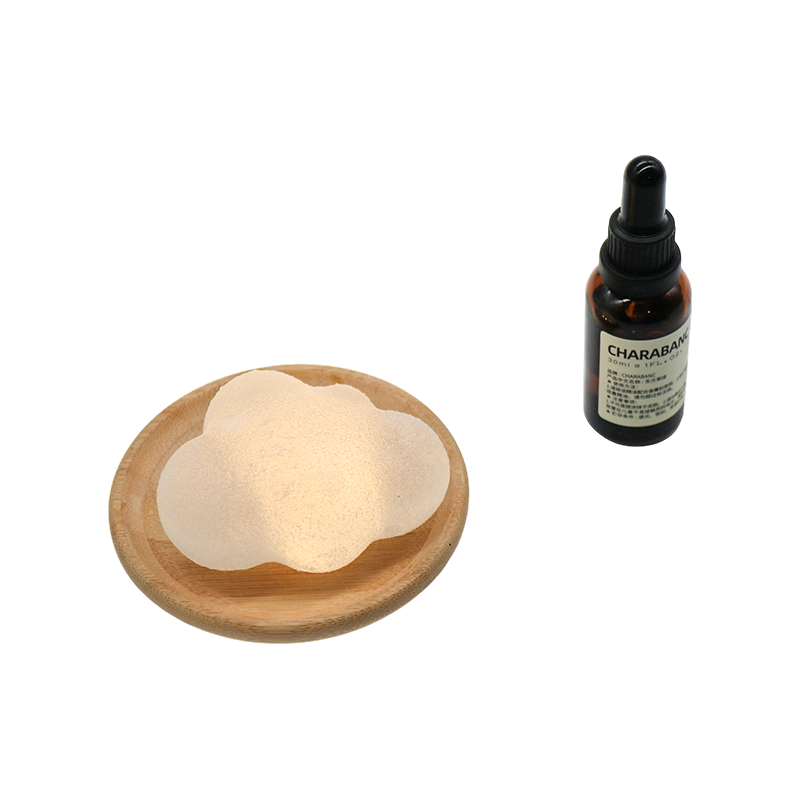 Cloud-Shaped Cypress Base Aromatherapy Lamp with Essential Oil DiffuserCombining a hand-polished cloud form, warm matte glow, and built-in diffuser for cypress or tea oils, this lamp provides a calming scent and soft light that complements an evening wind-down routine.View Product →
An aromatherapy art lamp takes the natural cue further. A cloud-shaped lamp with a cypress base can deliver a soft glow while dispersing essential oil, combining light, form, and scent into a single calm signal. In an evening routine, the sequence of dimming the main lights, switching to a warm accent lamp, and adding a subtle natural aroma mimics the body’s expectation of dusk. This is the temporal side of natural light that a static white panel cannot reproduce.
For the same reason, a candle warmer lamp has a place in a natural-light plan. Without any flame, it heats a candle from above to release its fragrance, and the lamp itself produces a warm, low-level glow that resembles candlelight. The flicker is absent, but the gentle amber brightness and the association with fire give the room the instinctive comfort that daylight lamps, even at high CRI, do not offer.
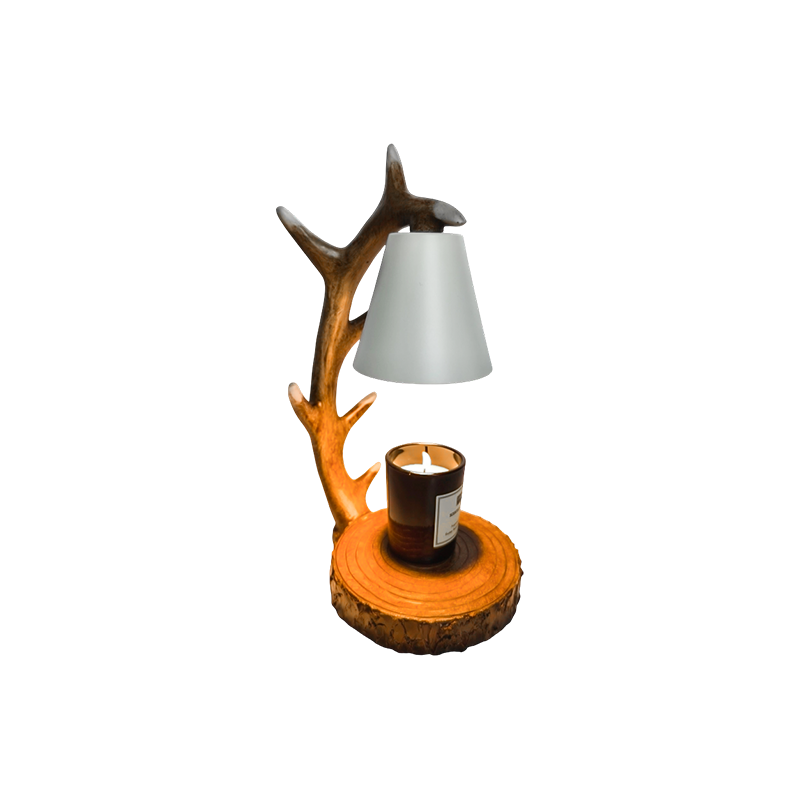 Nature-Inspired Candle Warmer Lamp with Antler-Like BranchesDesigned with branch-like antlers, this warmer lamp heats candles from above to release fragrance while casting dappled warm light, adding a woodland-inspired glow without an open flame.View Product →
The practical conclusion is that a well-designed lighting plan contains both ends of the spectrum: precise, high-CRI, tunable light for work and daylight simulation during the active hours, and warm, diffused, textured accent lamps for the wind-down hours. The decorative lamp is not a replacement for daylight; it is the other half of the story, completing the cycle from sunrise to nightfall.
What a Lighting Manufacturer Can Do for You
For most readers, buying a lamp is the end of the process. For design firms, hospitality buyers, and lighting brands, it is the beginning. Specifying lamps that mimic natural light at scale is not the same as buying one good desk lamp. You need documented spectral data, consistent LED binning across production batches, dimming drivers that behave predictably, and certifications that protect the buyer and the end user.
This is why working with a manufacturer rather than an assembler makes a difference. A factory that controls its LED sourcing, manages its own production lines, and tests each batch for color consistency can guarantee the numbers on the data sheet. A trader who buys finished products from unclear sources cannot. The same principle applies to decorative lamps: a carved wooden lamp or a patterned crystal piece is only as good as the material quality, the finish, and the electrical components behind it.
Customization is where the process becomes practical. A buyer with a drawing or a reference sample can work with a manufacturer to develop a product for a specific market, adjusting the color temperature, the dimming curve, the shade material, and the packaging. Production in small pilot runs, followed by larger batches, allows the design to be corrected before expensive commitments are made. For projects involving hotels, spas, boutiques, or office environments, this route gives the buyer exactly the light quality needed instead of accepting whatever is on the shelf.
If you are evaluating suppliers, ask three direct questions. Can they provide an independent spectral report for every model you order? Can they adjust the CCT and dimming behavior to match your application? And can they produce a pre-production sample within a defined timeframe? A manufacturer that says yes to all three is worth a conversation. A manufacturer that hesitates on the first question is not.
One example relevant to this discussion is Turing Paper, a decorative substrate currently in trial production by the manufacturer behind this site. The material produces non-repeating, nature-inspired surface patterns, and its developer is exploring applications in lighting, architecture, and fashion. Materials like this show how the search for natural light eventually leads beyond bulbs into the surfaces that light falls on.
To see the kinds of products that can be customized in this way, browse the product catalog on the company website, and contact the team directly with your specification or sample.
The answer to the original question is a straightforward yes. Lamps that mimic natural light exist in several forms: light therapy boxes designed for circadian stimulation, full-spectrum LEDs that render colors with near-daylight accuracy, tunable white lamps that follow the sun’s rhythm, sunrise alarms that ease you into the morning, and large ceiling panels that reconstruct the spatial feel of a sky. None of them replaces the real sun. All of them can improve the hours you spend under artificial light.
The difference between a satisfying purchase and a disappointing one comes down to specifications and expectations. Check the CRI, the R9, the flicker performance, and the rated lux at a realistic distance. Match the color temperature to the time of day you will use the lamp. Use direct light for focused work, indirect light for rooms, and warm accent light for the evening. And remember that decorative lamps, despite their modest role, belong in the same plan: they provide the warm, textured light that tells your body the day is ending.
Start with one well-chosen lamp, use it correctly for a week, and observe whether your eyes feel calmer, your focus lasts longer, or your evening wind-down comes more easily. In most cases, it will not be a dramatic transformation. It will be a quiet improvement in the quality of every hour of light, which is exactly what natural light should feel like.