

 English
 日本語
日本語

You have just unpacked your first candle warmer lamp, placed it on a side table, and looked around for the most obvious item: a candle. It should be simple, yet the range of choices can quickly become confusing. Should you use a small single wick or a large triple wick? Does the wax type matter when there is no flame? Is a scented candle still safe if it is being heated for six hours? Before you buy anything, here is the direct answer: the best candles for candle warmers are soy or soy-coconut blend candles in stable glass jars with a diameter between 2.5 and 3 inches, and with single or triple wicks chosen according to the jar size. This recommendation is not based on marketing preference. It is based on how heat melts wax, how fragrance releases under gentle warmth, and how jar geometry interacts with the lamp's bulb and shade.
Most candle warmer lamps are designed with a ceramic heat bulb, a metal or wooden arm, and a shade that directs heat downward. The wax inside the candle must melt from the top into a shallow pool. If the wax is too hard, the melt pool will be thin and the fragrance will remain trapped. If the jar is too wide for the shade, the outer edges of the wax will stay solid and create a dry draft. If the wick count is wrong, the pool may not spread evenly. Because these conditions vary, the best candle is not a single brand but a combination of several measurable properties. This article connects those properties to real purchasing decisions, so you can choose candles with confidence.
The Four Core Factors That Decide Compatibility
Every candle warmer setup involves four variable categories. Once you understand them, you will know exactly what to look for on a candle label or description. The categories are wax type, jar diameter, jar height, and wick count. Let's address each one, but not as an abstract principle. Imagine three different candles that people frequently try in a warmer.
The first is a luxury paraffin candle in a thick glass jar. It looks premium and has a rich cold scent. After two hours, the wax has melted only a few millimeters and the fragrance is noticeable but not strong. The second is a soy candle from a discount retail brand. It is wide and tall, with three wicks. The label promises a long burn time. Under the warmer, the top layer melts beautifully, but the jar is so wide that the heat cannot reach the edges. The third is a coconut blend candle in a small jar. It melts quickly, but the jar is short, and the bulb is closer than the recommended distance. The wax becomes too hot, affecting the fragrance performance. These failures are common, but they are preventable.
Wax Type: The Surface Chemistry of Working Candles
Wax type determines how quickly the candle melts, how slowly it releases fragrance, and what temperature the wax pool reaches. A candle warmer provides lower and more uniform heat than an open flame. The bulb normally emits 25 to 40 watts, which is enough to soften a wax surface but not hot enough to burn it. Therefore, waxes with lower melting points perform better under warmers. Soy wax melts around 120°F to 130°F. Coconut wax is even softer and melts around 100°F to 120°F. Beeswax, by contrast, requires 145°F to 155°F to fully melt. On a standard warmer, beeswax will release very little scent unless the lamp is set very close or the candle is preheated. Paraffin wax also sits around 120°F to 150°F, but it has a different failure mode: it can overheat quickly and smoke slightly even without combustion.
The practical conclusion is that you do not need to chase expensive boutique formulations. You need a wax with a cloud point and melting point near the bulb's operating temperature. Soy and coconut blends are the most forgiving. If you use pure beeswax, you must accept a weaker scent output. If you use paraffin, you must watch the temperature and avoid extended sessions.
Jar Diameter: Nothing Else Matters if the Candle Does Not Fit
Jar diameter is the most obvious constraint, but it is also the most frequently ignored. A warmer's shade has an inner opening, typically between 3.5 and 5 inches. The candle jar must fit comfortably, not scrape the shade or block heat circulation. A general guideline is to leave at least 0.5 inches of air gap between the jar's outer edge and the shade's inner edge. If the jar is too large, heat cannot flow down the sides. This creates a "dry ring" around the candle, where the wax stays solid and detached. After a few sessions, that ring becomes a hard crust. If the jar is too small, the bulb focuses all heat on the center, and the melt pool is too deep. The wax pool can overflow the sides, especially if the candle is filled all the way to the rim.
Because most decorative jar candles are 3 inches or 3.5 inches in diameter, a warmer with a 4-inch inner shade opening is the sweet spot. A 2.5-inch jar works in a smaller warmer, but you will have to rotate the candle frequently to prevent uneven melting. For standard retail jars, a diameter between 2.75 and 3.25 inches is ideal.
Jar Height: The Hidden Temperature Variable
The bulb-to-wax distance is determined by jar height and lamp design. The heat bulb is usually positioned 2 to 4 inches above the top rim of the jar. This distance is specified for safe operation and for even melting. If the jar is too tall and the shade is low, the bulb becomes vertically close. The wax heats faster, but it can also overheat, leading to scent degradation and cracks in thin glass. If the jar is too short, the bulb is far away. The melting process becomes sluggish, and the fragrance release dips. A good practice is to measure the vertical clearance before purchasing. For a typical warmer with a fixed arm, a jar height of 3 to 4 inches works well because it places the wax surface about the ideal distance from the bulb. If the jar is 5 inches or taller, choose a warmer with an adjustable arm or a taller shade, or simply melt only the top portion and pour off the extra wax after each session.
Wick Count: More is Not Always Better Under a Warmer
Wick count is not about burning. Under a warmer, wicks are not ignited. They remain as small cotton threads in the wax pool. However, wick count still matters because it relates to the jar width and the distribution of the melt pool. A single wick jar is usually 2 to 2.5 inches in diameter. The melt pool forms around the center, and the visible melt circle is smaller. This is fine for small warmers but can be slow for larger rooms. A triple wick jar usually has a wider diameter, often 3 to 3.5 inches. The three wicks create a larger surface area, allowing the heat from the bulb to penetrate the wax more efficiently. In practice, triple wick jars are the most common candles used in warmers because they sit flush with a standard 4-inch opening and melt into a broad pool quickly. Double wicks are rare in retail, but if you find one, it should be treated as a medium-width option.
The key error is using a single wick candle in a wide shade. The wick sits at the center, and the melt pool forms in the middle. The sides dry out. The candle becomes a "borer," leaving a thick shell of wax that will never melt. Conversely, using a triple wick candle in a small shade can be messy. The wax melts too quickly, and if the jar is not heat-resistant, the glass can be stressed. Therefore, match the wick count to the jar width, not to the desire for a stronger scent.
Deep Dive: Wax Types and Selection Criteria
When buyers search for candles for warmers, their primary concern is scent. They want the room to smell good without the hazards of an open flame. The wax type is the main lever for that experience. Each wax has a distinct "personality" under heat, and understanding these personalities prevents disappointment.
Soy Wax: The Safe, Slowly Melting All-Rounder
Soy wax is the most popular candle base for warmer users. Its melting point, typically 120°F to 130°F, sits comfortably in the temperature range produced by a warmer bulb. At this temperature, soy wax becomes viscous but does not scorch. The fragrance oils held in the wax are released gradually, which is exactly what you need for a long session. The melt pool is generally smooth and even. On the downside, soy wax can form a slight frost on the surface after heating and cooling. This does not affect scent, but some users worry about the cloudy appearance. Soy wax also tends to create a shallow pool in large jars, so the scent throw may not fill a very large room. However, if you use a triple wick soy candle in a 3-inch jar in a 10-by-12 foot room, the performance will be solid.
From a purchasing perspective, soy candles are usually priced slightly above paraffin. They cost less than pure coconut or beeswax, and they carry a clean-label appeal. For B2B buyers adding candles to their assortment, soy is a safe base. It is also the easiest wax to integrate with a branded line because it does not have the high melting requirement of beeswax or the smoke risk of paraffin.
Coconut Wax: The Fast Dissolver with Clean Scent Throw
Coconut wax is a newer option in the candle market. It is a blend of coconut oil and other vegetable oils, not a single pure component. Its melting point is usually around 100°F to 120°F, which is lower than soy. This means that a coconut candle will melt nearly immediately under a warmer. The scent release starts right after the lamp is turned on. The texture of the melted wax is thin and watery, which allows the fragrance to lift into the air quickly. The downside is that coconut wax candles burn down faster, because the pool is larger and the wax is less dense. With a warmer, this does not matter as much as you might think, because you are not losing wax to evaporation at the same rate as an open flame. Still, a coconut candle can become too liquid in a very hot lamp. The bulb should be positioned a little higher, or the jar should be on the shorter side.
For those who want maximum scent from a short warming session, coconut wax is excellent. But if you prefer a steady, gradual room fragrance, soy will be more controlled.
Beeswax: The Natural Option That Needs More Heat
Beeswax is a natural, long-lasting wax with a sweet, subtle honey note. It burns clean in a flame, but under a warmer it is the most demanding base. Because the melting point is 145°F to 155°F, a 25-watt bulb may not be enough to create a full pool. The candle will soften at the top, but the scent will remain very faint. Some beeswax candles are made with added fragrance oils, but the base wax's resistance to low heating limits the release. The only way to get good performance from a beeswax candle is to use a warmer with a higher wattage bulb, around 35 to 40 watts, and place the candle closer to the heat source. Even then, the pool will be smaller than a soy candle. If your use case involves natural, sustainable ingredients and you do not mind a milder aroma, beeswax is a respectable choice. Do not expect a room-filling fragrance from it.
Paraffin Wax: Comfortable Scent Throw but Higher Smoke Risk
Paraffin candles are ubiquitous and often less expensive. They hold fragrance well and release it quickly. Under a warmer, a paraffin candle can produce a strong aroma in a few minutes. However, paraffin has a potential safety issue. When overheated, it can reach a temperature where it begins to smoke and produce soot. This is not a major issue in a well-ventilated room, but it can become noticeable after prolonged heating. In addition, paraffin wax is derived from petroleum, which some consumers avoid for sustainability reasons. If you do use paraffin, choose a warmer with a moderate bulb wattage and do not leave the lamp on all day. The candle's top layer will melt and release most of the scent. After a few hours, you may notice a faint, harsh note, which is not typical of wax itself but a result of the oil overheating.
Blended Waxes: What Most Premium Candles Actually Use
The best-performing candles in warmers are often blends. Soy and coconut mixed together is a popular combination. The blend offers the even melting of soy and the fast scent release of coconut. Another common blend is soy and paraffin, which mixes the affordability and fragrance of paraffin with the cleaner burn of soy. These blends are sold under many names without a clear label. If you see a candle described as "premium blend" or "vegetable blend," check the melting point and the cold throw. A good blend will melt somewhere between 115°F and 130°F, which is ideal for a warmer.
For B2B buyers, a reliable source is a candle manufacturer that can provide a specification sheet with melting points, fragrance load, and jar dimensions. If you obtain candles from a supplier that does not provide these data, you are taking on a risk. Your own customers will not know why the scent is weak, and they may blame the candle warmer.
| Wax Type | Melting Point (°F) | Scent Release | Warmer Performance | Best Choice For |
|---|---|---|---|---|
| Soy wax | 120–130 | Moderate, steady | Excellent – melts evenly | Daily home use |
| Coconut wax | 100–120 | Fast, clean | Excellent – quick melt | Maximum scent throw |
| Beeswax | 145–155 | Subtle, natural | Needs higher lamp wattage | Natural and unscented |
| Paraffin wax | 120–150 | Strong, fast | Good but smoke risk if too hot | Budget-friendly purchases |
| Palm wax | 140–160 | Medium-hard | Below average | Decorative crystal-texture candles |
| Blended wax | 115–130 | Balanced and consistent | Best overall compromise | Most premium retail candles |
Size, Fit, and Jar Geometry: Why Most "Bad" Candles Fail
Have you ever seen a candle warmer photo with a huge candle sitting under a small shade? The candle's jar touches the inner wall, and the heat cannot circulate. This is the most common reason a candle warmer appears ineffective. It is not the warmer's fault; it is a load mismatch. The geometry of the jar must work with the geometry of the lamp.
There are three geometric zones to check before you buy a candle: outer diameter, inner clearance, and vertical height. Outer diameter should be at least 0.25 inches smaller than the shade's opening, but 0.5 inches is safer. If the shade has internal decorative ribs or a narrow neck, the gap needs to be larger. A candle that clears the shade but touches the rim of the lamp's body can also cause problems, because the heat trap becomes too tight. The best way is to measure the shade's maximum inner opening and compare it against the candle jar's maximum diameter. Do not rely on the jar's bottom diameter, because candles are often cone-shaped and wider at the top.
The second variable is the vertical height. A common warmer has a bulb in a fixed position. If the candle is tall, the bulb sits close to the jar's rim. If the candle is short, the bulb hovers higher. Some new warmers include an adjustable arm, which allows you to lower the bulb as the candle melts. For a fixed-arm warmer, choose a candle that keeps the top rim between 2 and 4 inches below the bulb. This range works for both scent release and safety. If the candle is 5 inches tall and the bulb is only 2 inches above the rim, the wax will overheat, and you may see smoke or subtle burning around the jar's edge.
The third variable is jar wall thickness. Standard decorative glass jars are made of borosilicate or soda-lime glass. Soda-lime glass is more common and cheaper, but it does not handle rapid temperature changes as well. Under a warmer, the glass expands as the wax melts. If the glass is thin, the stress can be uneven, and small cracks may appear after repeated heating. A safe candle jar for warmers is at least 3 millimeters thick, with a flat base that sits stably on the lamp's platform. If the candle sits on a metal plate, a flat glass bottom transfers heat evenly. A concave or ridged bottom creates air pockets and uneven melting.
To make these measurements easy to apply, here is a general compatibility table for common candle jar sizes. This is a starting point, not an absolute rule. Always verify dimensions with your specific candle warmer.
| Jar Diameter (inches) | Recommended Wick Count | Optimal Shade Opening (inches) | Typical Use |
|---|---|---|---|
| 2.0–2.5 | Single wick | 3.0–3.5 | Small bedrooms, desks |
| 2.5–3.0 | Single or triple | 3.5–4.5 | Living rooms, offices |
| 3.0–3.5 | Triple wick | 4.0–5.0 | Wide living areas |
| 3.5–4.0 | Triple wick | 5.0 or larger | Open-plan spaces |
How to Optimize Scent Output and Burn Time
Even a perfectly sized candle will not deliver great scent if the room is too large or the warmer is used for only 15 minutes. Scent output depends on fragrance load, heating time, and the size of the open wax pool. Let us look at each factor in practical terms.
Fragrance Load: What Percentage to Look For
Most scented candles contain 5% to 12% fragrance oil by weight. A candle with 8% to 10% is usually the sweet spot for warmers. Lower loads, around 5%, will smell weaker because the heat cannot force enough oil out of the wax. Higher loads, above 12%, can be overpowering, especially in a small room, and may separate from the wax if the candle is heated for a long time. When you purchase candles, check whether the label states the fragrance load. If it does not, use your nose as a guide at room temperature. A cold candle that smells good will likely translate into a warm scent, but the intensity may change. For strong room fragrance, choose a candle with a fragrance load of at least 9%.
Heating Time: How Long Does It Take to Smell
In the first 15 to 20 minutes, the wax just starts to soften. The scent begins to rise but is not yet stable. By 30 minutes, the melt pool has formed on the top, and the fragrance fills the area. By one hour, the scent is at its strongest. This is the natural progression. A common mistake is expecting a burst of fragrance in 10 minutes. Warmers are not diffusers, they are slow-release heaters. If you need immediate scent, choose a coconut blend, which melts faster. If you prefer a gradual spread that lasts all evening, set the lamp before your guests arrive and let it warm for 45 minutes.
Do not run the warmer for more than 6 hours continuously. The wax will eventually dry out, and the scent will diminish. Also, the repeated heating and cooling of the wax can cause the fragrance molecules to evaporate quicker over time. A good strategy is to warm the candle for 3 to 4 hours, turn it off for an hour, then warm it again. This balances scent quality with candle lifespan.
Full Melt Pool: Why It Matters
A full melt pool means the entire top surface of candle wax is liquid. When the pool reaches the edge of the jar, the candle is "even." If it stops short, the candle will form a ring of unmelted wax and the future melt pool will shrink. Most warmers produce a pool of about 2 to 4 inches in diameter. If your candle is 3 inches wide, it should be able to fill the entire top. If the candle is 3.5 inches wide, the warmer may only melt the center. The solution is to rotate the candle after each session or use a candle with a smaller diameter. For a candle that has already tunneled, you can melt the wax pool, then hold a spoon to the glass to straighten the edges. This is a practical workaround for existing candles.
Room Conditions and Scent Projection
The space around the warmer also matters. If the warmer is placed on a high shelf, the scent may hover above rather than spreading downward. If it is in a drafty hallway, the aroma will be carried away quickly. The best placement for a candle warmer is in the center of a room at seating height, about 24 inches above the floor. A room with a fan running at low speed will distribute the fragrance more evenly. A closed room will hold the scent for longer. A larger room, like a 20-by-20 foot living area, may need a stronger candle or a warmer with a higher wattage bulb. A smaller room, like a bathroom, will only require a single wick candle.
Safety Considerations for Every Setup
Using a candle warmer is generally safer than lighting a wick, but not risk-free. The bulb generates heat, and the candle wax becomes a hot liquid. You must respect the physical limits of the materials involved.
First, maintain the correct vertical distance. The bulb surface can reach 400°F or more in some ceramic heaters. The safe distance between the bulb and the candle rim is usually 2 to 4 inches. If the bulb is closer, the wax may begin to smoke, and the jar may crack. If it is farther, the wax will not melt properly and the scent will be weak. Most modern warmers are designed for 2.5 to 3.5 inches of clearance. If your candle is taller than expected, do not force it by removing the shade. Instead, choose a shorter jar or use a candle warmer that has an adjustable arm.
Second, do not heat a candle that has a damaged glass jar or a missing lid. A cracked jar can shatter when heated. A candle without a lid may cause the wax to accumulate dust and debris. Third, avoid using pure essential oils inside a candle jar unless the warmer is specifically designed for that. Many candle warmers have a top dish for essential oils, but a candle jar itself is not the right container. Fourth, always place the warmer on a stable surface away from curtains, books, and pets. The lamp's arm and shade can become warm to the touch, especially near the bulb. Children and pets should not have access to the lamp while it is on.
Another safety point is to check the power cord and bulb socket. If the bulb is loose, it can flicker and overheat. Use the recommended bulb type and wattage. Many warmers use E12 or E14 candelabra bulbs with 25 to 40 watts. Never exceed the maximum wattage marked on the lamp. If the bulb melts the wax too quickly, reduce the bulb wattage or raise the lamp head.
Finally, keep an eye on the wax level. If the candle has burned too low, the jar's bottom can become too hot. When only 0.5 inches of wax remains, stop using it. The heat is now very close to the glass, and the remaining wax can overheat. Most experts recommend discarding the candle when the wax level has fallen to the base. The same applies if you see soot or unusual smoke. A well-made candle warmer should be silent and smoke-free. If you smell a burning odor, turn the lamp off and inspect the candle.
Choosing the Right Candle Warmer Lamp for Your Candle
No candle recommendation exists in a vacuum. A candle warmer lamp is a practical object with a specific arm length, shade depth, and wattage. Three popular models from the Litehealing candle warmer line illustrate different compatibility approaches.
Veil Light: A Black Cone Shade for Focused Heating
The Veil Light candle warmer lamp uses a black cone shade that directs heat straight down. The cone shape narrows the beam, which is ideal for small to medium jar candles. Because the shade has a deep profile, a 3-inch triple wick jar produces a clean and even melt pool. The dark shade also creates a more dramatic ambient effect, which suits bedrooms and cozy reading corners. For a 2.5-inch single wick candle, the Veil Light is particularly effective because the focused heat reaches the center without over-warming the edges. If you own a collection of wide jars above 3.5 inches, the cone may be too narrow. Use it with standard 3-inch jars for the best match.
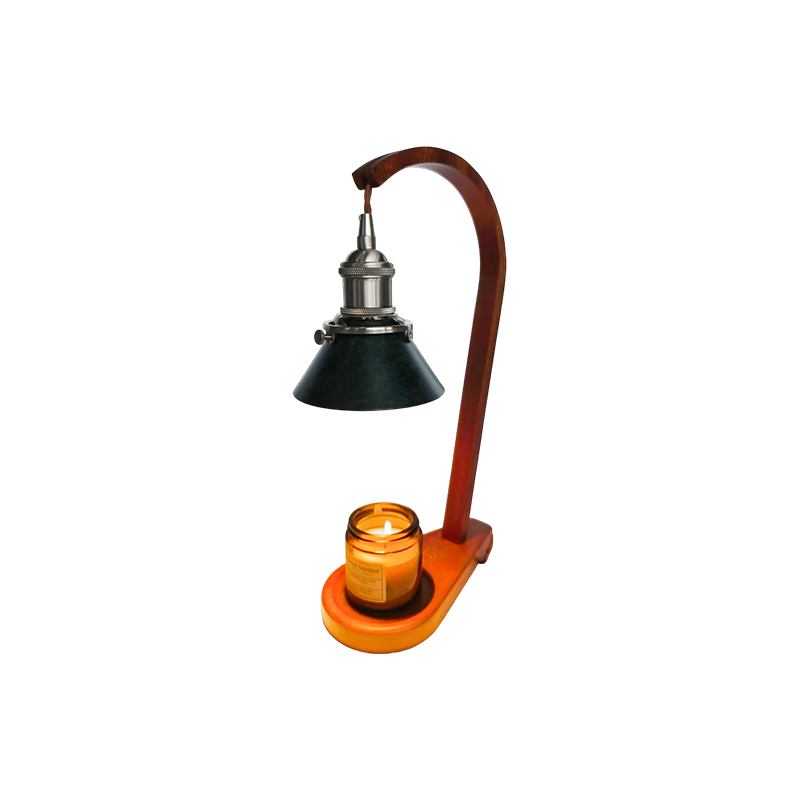 Candle Warmer Lamp with Black Cone ShadeThe Veil Light features a narrow cone shade that directs heat downward, making it ideal for small to medium jar candles. Its deep profile ensures a clean melt pool, while the dark shade adds a dramatic ambiance for cozy corners.View Product →
Quiet Corner: A Simple Geometric Frame with Generous Clearance
If you prefer a thinner, more open frame, the Quiet Corner candle warmer lamp provides generous side clearance. Its geometric frame holds the bulb slightly higher above the candle rim, which reduces the risk of overheating. This makes it a good option for paraffin candles or candles with a higher fragrance load, because the wider distance prevents the wax from becoming too hot. The frame also accommodates taller jars. With a jar height of 4 inches, the bulb still sits in a functional range. The minimalist design fits into office desks, entry tables, and bathrooms, where the lamp can stay on for several hours without becoming a visual burden.
 Candle Warmer Lamp with Simple Geometric FrameThe Quiet Corner offers a minimalist geometric frame with generous side clearance, reducing overheating risk. It suits taller jars and paraffin candles, providing steady warmth that fits well in office or bathroom settings.View Product →
Arc Glow: A Wooden Curved Arm for Adjustable Reach
The Arc Glow candle warmer lamp features a curved wooden arm that brings the bulb closer to the candle. The curved shape makes it possible to lower the bulb over short jars, providing a stronger heat source for harder waxes like beeswax. For a small coconut candle, the Arc Glow may be too strong, unless you raise the arm to increase the distance. The wood creates a warm, organic look, making this model the best fit for natural-style candles in ceramic or clay vessels. If you like to change candles often, the Arc Glow is flexible because the arm can be adjusted. This allows you to match different jar heights without switching lamps.
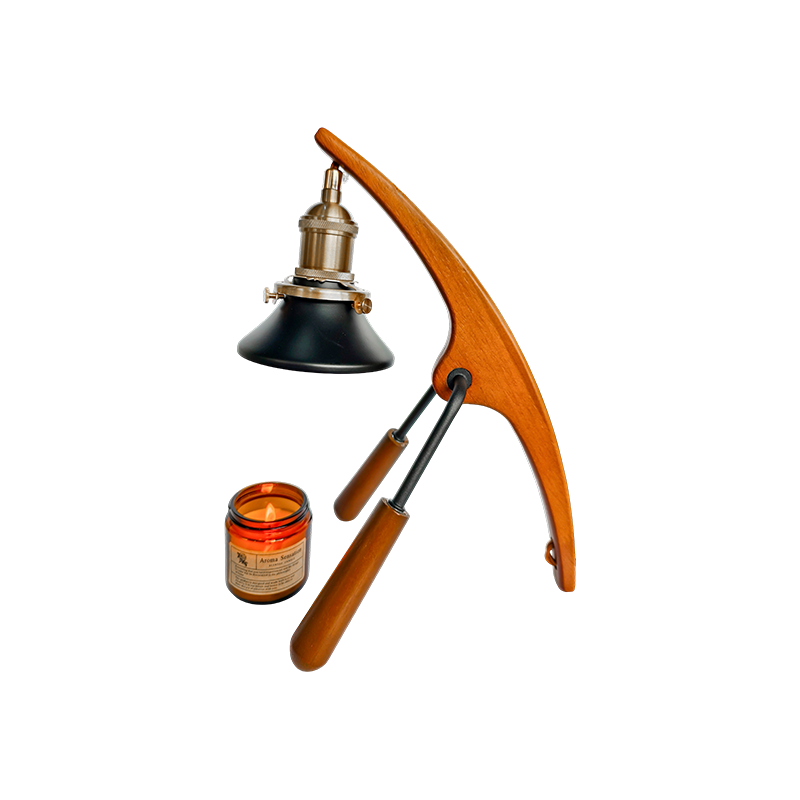 Candle Warmer Lamp with Wooden Curved ArmThe Arc Glow has a curved wooden arm that can be adjusted to lower over short jars, delivering stronger heat for harder waxes. Its organic look pairs naturally with ceramic vessels, and the adjustable arm suits different candle heights.View Product →
Each of these lamps serves a specific candle profile. There is no single "best" lamp for every candle. It is a pairing decision. If you sell candles alongside your lamps, you can create pre-selected combinations for your customers and avoid mismatched performance.
What about Wicks and Unlit Candle Maintenance?
With a candle warmer, there is no flame, so you do not need to trim wicks before each use. However, wick management is not completely irrelevant. The wicks remain in the wax pool. They can become coated with melted wax and may look clumpy after several sessions. This is normal, not a safety issue. Use a pair of tweezers to gently remove any charred fragments once a week. If a wick is too long, it may touch the melted wax and sink to one side. This does not affect heating, but it can look untidy.
Do not attempt to light the wick while the candle is sitting under the bulb. The bulb heats the wax, and the wick remains in a liquid pool. A flame would be dangerous because of the exposed liquid wax and the proximity of the hot shade. If you want a flamed candle, remove the candle from the warmer and light it in a separate holder.
When storing candles, keep them away from direct sunlight and heat sources. A candle that has been stored in a hot trunk or near a radiator may change its melting point. This can alter not only the performance under your warmer but also the color and texture. Store candles in a cool place with a lid to preserve the fragrance load. Some fragrance oils are sensitive to oxidation, and a warm environment can cause them to fade before you ever use the candle.
Buying Guide Summary and Final Recommendations
By now, you have a clear set of standards. Let's condense everything into a checklist that you can apply to any candle warmer in the market.
- Choose a candle with a melting point between 115°F and 130°F. This is the most reliable range for 25–40 watt warmer bulbs.
- Prefer soy, coconut, or soy-coconut blends. They melt evenly and release fragrance consistently.
- Match the jar diameter to the shade's inner opening. The gap should be at least 0.5 inches on all sides.
- Keep the vertical clearance between the bulb and the candle rim in the 2–4 inch range. Adjust the lamp or change the candle if this range is exceeded.
- Use a single wick jar only if the jar diameter is below 2.5 inches. Use a triple wick jar if the diameter is above 2.75 inches.
- Check for a thick glass jar with a flat base. Avoid thin, decorative glass that may crack under thermal stress.
- Look for a fragrance load of 8% to 12%. This gives you a pleasant room-filling effect without overwhelming intensity.
- Do not heat the candle for more than 6 hours in a single session. Turn the lamp off and allow the wax to cool.
- Replace the candle when less than 0.5 inches of wax remains. Overheating the jar bottom can cause damage.
These points apply to any user, from a homeowner buying a single jade candle to a retail buyer selecting candles for resale. The key is to abandon the idea that a candle warmer makes every candle work the same way. It does not. The warmer is a precision tool that rewards accurate pairing.
| Selection Priority | Recommended Specification | Reason |
|---|---|---|
| Wax type | Soy or coconut blend | Low melting point for even, safe heating |
| Jar diameter | 2.75 to 3.25 inches | Fits most standard warmer shades |
| Wick count | Triple wick for 3-inch jars | Creates a wide melt pool and better scent distribution |
| Fragrance load | 8% to 12% | Balanced scent strength under gentle heat |
| Jar height | 3 to 4 inches | Keeps bulb distance in the safe range |
| Glass thickness | 3 mm or thicker | Prevents cracking during repeated heating |
To see how these specs interact with real lamp designs, revisit the three candles warmer models discussed above. The Veil Light works best with a narrow melt pool. The Quiet Corner offers more clearance for taller jars. The Arc Glow adjusts to different candle heights. If you are purchasing for your own home, pick one model and one candle profile, then buy in small batches to test. If you are stocking retail shelves, create a compatibility chart for your customers. Explain that wax type, jar size, and lamp wattage must all be considered together.
Ultimately, the best candle for a warmer is not the one with the biggest brand name. It is the one that fits the physical system. A low melting point wax in a correctly sized jar under a properly adjusted bulb will outperform the most expensive candle in a mismatched setup. So before you buy that next scented candle, take out a ruler. Measure the jar. Check the label for wax composition. Look at the lamp's wattage and arm height. A minute of careful checking will make every candle screaming session a pleasant one.